How to Get Your First Brand Deal (Without 100K Followers)
How to Get Your First Brand Deal (Without 100K Followers)
The advice you have read a hundred times is to grow first and monetise later. Hit 10K, then 50K, then the brands come to you.
That advice is out of date, and the industry's own numbers say so.
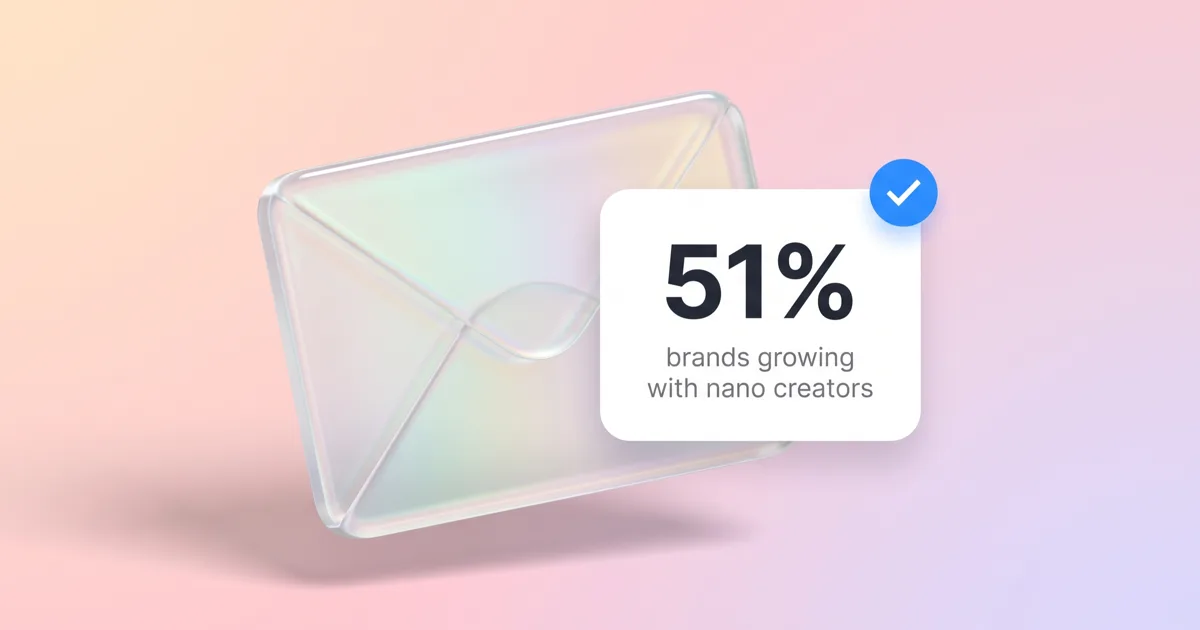
In the Influencer Marketing Hub Benchmark Report 2026, published 4 May 2026 from a survey of over 600 industry respondents, 51.43% of brands said they plan to expand their work with nano creators and 52.83% said the same about micro creators. For macro creators the picture is flat: 20.59% plan to expand, 20.58% plan to contract. The money is not moving up the follower count. It is moving down.
So the question is not how many followers you need. It is why a brand would pick you over the other forty accounts in the same niche, and what makes them stop scrolling past your email.
Why small accounts win now
Two things changed at once.
The first is trust. A nano account posting to two thousand people who know their name reads as a recommendation. A macro account posting to four hundred thousand reads as an advert, because it is one.
The second is risk. Brands got burned. In the same benchmark report, fake or bot followers account for 56.5% of all reported fraud and quality issues, with inauthentic and purchased engagement adding another 20.8%. More than three quarters of everything that goes wrong in influencer marketing traces back to numbers that were not real.
That fear is your opening. A brand approaching a large account has to assume some of it is inflated and pay to find out. A brand approaching you can check in five minutes. Small is not the handicap. Small is the reason they can say yes quickly.
But only if they can check. This is why tools like ProveitGo exist for creators rather than only for brands: the account that removes the doubt gets the reply, and the one that asks to be believed gets ignored.
The three numbers they look at before replying
A marketing manager reading your email is not evaluating your aesthetic. They are running a silent checklist, and it is shorter than you think.
Your real engagement rate. Not your best post. The rate across your recent output, calculated on a base that makes sense for the platform. On Instagram and YouTube that base is your followers. On TikTok it is your views, because the For You page reaches people who do not follow you, and dividing by followers there produces numbers that look impossible.
Your median views, not your average. One video that went to 200K and nine that went to 2K gives you an average of 21.8K and a median of 2K. The median is the honest one. Brands who have been doing this a while ask for it by name.
Whether the audience is where the product ships. This kills more first deals than any other single thing, and it has nothing to do with your content. A brand with no distribution in your country cannot send you the product, so the conversation ends before it starts.
Notice what is not on that list: your follower count, your feed's colour palette, and how many hashtags you use.
The problem is that all three of those numbers are ones you report about yourself. A brand that has been burned twice this year has no reason to take your word. This is the entire reason a verified media kit outperforms a designed one: a ProveitGo kit pulls the numbers from the platforms themselves and stamps them with a measurement date, so the brand is reading a measurement rather than a claim. The design is not what is doing the work. The verifiability is.
The email that gets a reply
Most first pitches fail for the same reason: they are about the creator.
Here is the shape that works, and why each part earns its place.
A subject line that says what this is. "Collaboration" tells them nothing. "Skincare content for [brand], 8.8K on TikTok, 13% engagement" tells them whether to open it. You are not being coy. You are saving them a click.
One sentence on why them. Not flattery. A reason. You already use the product, you have posted about the category three times, your audience keeps asking where you got it. If you cannot write this sentence honestly, you have picked the wrong brand.
Your numbers, in the body, not attached. A PDF attachment is a decision to open something. Two lines of text is not. Put the three numbers above directly in the email and link to the full kit for anyone who wants more.
One concrete proposal. "I would love to work together" puts the work on them. "I can do one Reel and three stories, and I would post it the week of the 15th" gives them something to answer yes or no to.
A short close. No paragraph about your journey. They will read that on your profile if they get interested.
The whole thing should fit on a phone screen without scrolling. If a brand has to scroll to find your engagement rate, you have written a brochure, not an email.
What kills a pitch in ten seconds
Numbers with no date. "35K followers, 8% engagement" from a screenshot taken who knows when. Engagement moves week to week. A figure with no measurement date is a figure the brand has to verify from scratch, which is exactly the work you were supposed to save them. A ProveitGo kit carries its measurement date on the page for this reason, and refreshes itself every 24 hours so the date is never an embarrassment.
An engagement rate that does not match the platform. A 40% rate on Instagram is not impressive, it is a red flag, because it usually means someone divided by the wrong thing. If your number looks impossible, explain the base you used, or use a tool that shows it for you.
A media kit that contradicts your profile. They will open your account in another tab while reading. If the kit says 12K and the profile says 9K, the conversation is over, and not because of the three thousand.
Silence about the parts that are weak. If your Instagram is quiet and TikTok is where you actually live, say so. A brand that discovers it themselves wonders what else you left out.
None of these are about the size of your audience. All four are about whether your numbers survive a check that takes two minutes. If you are not sure what a brand sees when they look you up, run the check yourself first and fix what you find before they find it.
What to charge for the first one
The honest answer for a first deal is that you have very little leverage, and pretending otherwise costs you the deal.
That does not mean free. Free work sets a price, and the price it sets is zero. It means your first rate should be defensible rather than ambitious.
The usable formula is your median views multiplied by a rate per thousand views, adjusted for what the brand is actually buying. A single story that disappears in 24 hours is not the same product as a Reel they can run as an advert for six months. Usage rights, exclusivity and turnaround are where the money is, and they are the parts first time creators give away without noticing.
Our full breakdown of how to price a sponsored post covers the numbers. The part that matters here is simpler: quote a rate, in the email, with the deliverables attached to it. A creator who asks "what's your budget?" has just told the brand they have no idea what they are worth.
If the brand only offers product and you decide to take it, take it deliberately, for a reason. A product worth 200 euros from a brand your audience already asks about can be worth more than 80 euros in cash from one they have never heard of. Decide which one you are doing.
Before you post: agree these four things
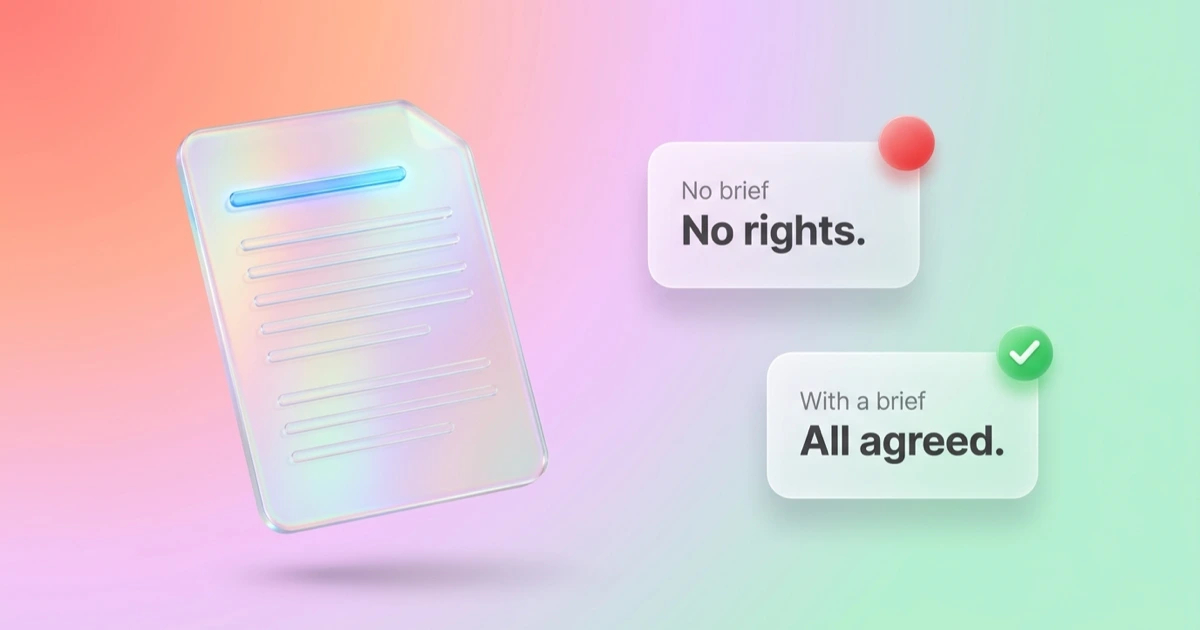
The deal is not done when they say yes. It is done when you both mean the same thing.
| What to agree | Why it bites later |
|---|---|
| Exact deliverables | "A post" means a feed post to you and a Reel plus stories to them |
| Usage rights and duration | Whether they can run your face as a paid advert, and for how long |
| Exclusivity | Whether you can work with a competitor next month, and which brands count |
| Payment terms | 30 days is normal, 90 is not, and "after the post performs" is not a term |
Put it in writing. An email that says "just to confirm" and lists these four is a contract in every way that counts, and it takes two minutes.
The part nobody tells you
Your first deal is rarely the result of a cold pitch to a brand you love. It is usually a brand that was already looking, found an account the right size in the right country, and could verify the numbers without a meeting.
Which means most of the work happens before anyone contacts you. Your figures need to be current, they need to be checkable, and they need to say where your audience actually is. A creator whose numbers are three months old and self reported will lose to an equally sized creator whose numbers were measured this week, every time, and will never find out why.
That is the whole job. Not more followers. Numbers a stranger can trust.
Build a verified media kit with ProveitGo and send a link instead of a claim. Your numbers are measured from the platforms, dated, and updated on their own, so the brand checking you at 9pm on a Tuesday sees the same thing you would show them in a meeting.
Verify before you pay. Prove after you launch.
ProveitGo detects fake followers, bot engagement and fraud, then tracks real conversions. One dashboard, 60 seconds.
Run an Influencer Audit →