What an Influencer Brief Must Contain (and the 5 Omissions That Cost You)
What an Influencer Brief Must Contain (and the 5 Omissions That Cost You)
A skincare brand pays a creator with 80,000 followers. The video goes live. It looks good, it gets views, the comments are warm.
And the brand gets nothing out of it. The product name is said once, twelve seconds in. There's no link in the caption. The brand wants to run the video as a paid ad: the creator says no, that was never discussed. Three weeks later, she posts for a direct competitor.
None of this is her fault. She delivered exactly what she was asked for. The problem is everything she wasn't asked for.
The brief isn't paperwork, it's the product
In a collaboration, a brand isn't buying a post. It's buying an intention turned into content, and the brief is the only place that intention exists in writing.
Serious creators ask for one themselves. Without a brief, they work blind, reshoot three times, and end up resenting the brand. A brief protects the person paying as much as the person producing.
The six blocks of a brief that holds up
1. The objective, in one sentence
Not "raise awareness," but something you can actually observe: get women aged 25 to 35 in Austin to try the product, or clear the remaining stock before the new drop.
That sentence drives everything else. An awareness goal and a sales goal do not produce the same video, the same call to action, or the same definition of success.
2. The deliverable, counted and dated
How many pieces of content, what type, on which platform, published when.
"A TikTok video" is not enough. "One 30 to 60 second TikTok, posted between March 10 and March 15, plus a reminder story on launch day" is a deliverable. You can tell whether it happened.
On ProveitGo, that count is attached to the campaign itself, so when the brand reviews the delivery it sees exactly what was asked for. Specify vertical or horizontal too, if you plan to reuse the footage elsewhere.
3. The three messages
Three, not ten. A creator asked to fit eight talking points produces an ad, and the audience feels it instantly.
Pick the main benefit, the differentiator, and the action you want. Drop the rest.
4. What's off limits
The most useful block, and the one most often missing. Common examples:
- no competing brand mentioned in the same video,
- no results promise ("lose weight in a week"),
- no copyrighted track if you intend to run the content as a paid ad,
- nothing published before a given date if there's an embargo.
5. Creative freedom, stated explicitly
Say where the creator is free. It feels counterintuitive, but it is what drives performance: their audience follows them for their voice, not yours.
Put it in writing. "The structure, the wording and the edit are yours; the three messages and the restrictions above are firm." You'll get a better video and fewer rounds of revision.
6. How you'll measure
Which link, which promo code, which screenshot of the analytics, and by when. If nobody writes it down before, nobody produces it after, and you will never know what the campaign returned.
That's exactly what ProveitGo automates: each creator gets a tracking link, the orders it drives land in the brand's dashboard, and campaign performance reads itself without a spreadsheet. The full method is in how to measure influencer marketing ROI.
The five omissions that cost you
Usage rights
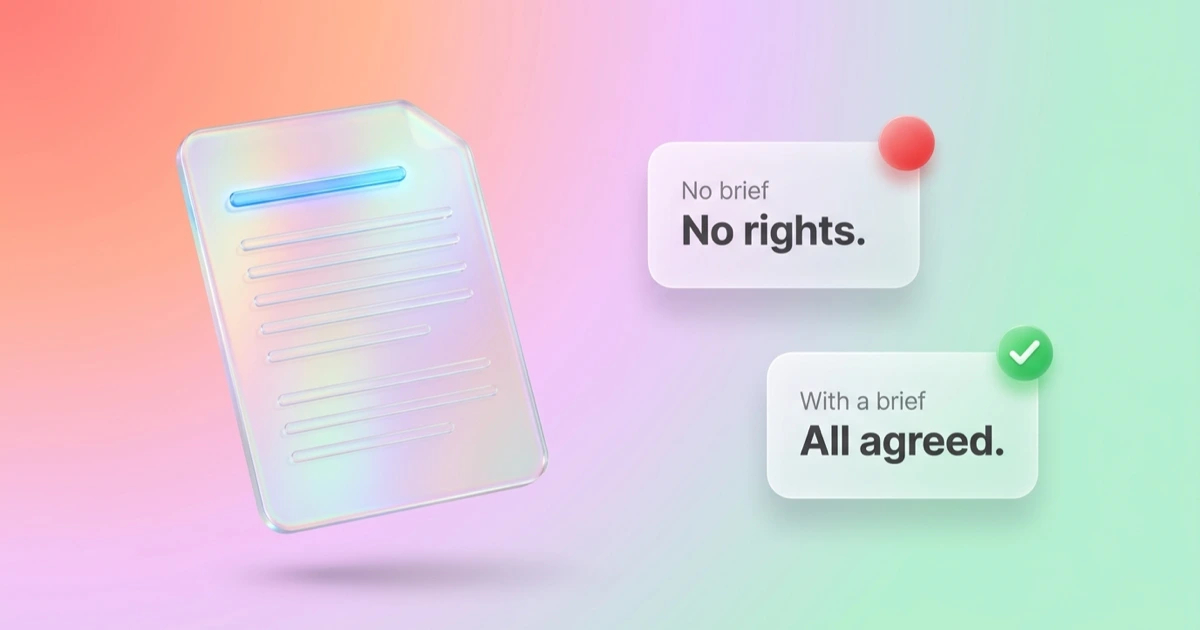
The most common and most expensive omission. By default, a creator posts on their own account, and that's it. If you want to run the video as a paid ad, put it on your site, or play it in store, that gets negotiated up front, and it gets paid for.
Write down three things: which channels, for how long, in which territories. A video you can run in paid media for six months is worth considerably more than a single organic post. That's fair to both sides.
Exclusivity
Without a clause, nothing stops the creator from posting for a competitor the following week. And they would have done nothing wrong.
If exclusivity matters to you, state its duration and its scope: "no collaboration with another skincare brand for 30 days." Broad, long exclusivity gets paid for too, because you're asking them to turn down work.
The review window
How long do you have to approve the video before it goes live, and how many rounds of revision are included?
Without that line, two classic outcomes: the brand leaves the creator waiting three weeks, or asks for a fifth edit. Two business days and one consolidated round of feedback is a healthy rule. On ProveitGo, the conversation and the delivery live in the same thread, so feedback is timestamped and nobody wonders who is waiting on whom.
Disclosure
Sponsored content has to identify itself. Platforms require it, and regulators increasingly enforce it. In the US, the FTC expects the disclosure to be clear and hard to miss, not buried in a wall of hashtags.
Put it in the brief rather than leaving the creator to decide alone: a "paid partnership" label plus the platform's native disclosure tool. It protects everyone, and it does not hurt performance.
What happens if it flops
The question nobody wants to raise. The honest answer is simple: a creator commits to a deliverable, not to a result. They control neither the algorithm, nor the weather, nor the news cycle.
So write it down: payment is due on compliant delivery. In exchange, you are entitled to insist that the deliverable match the brief exactly. That's a fair trade, and it saves you the painful post-campaign conversation.
The brief doesn't replace the agreement
The brief says what to make. The agreement says who owes what to whom. Four things must be settled before the creator starts filming:
- the fee and exactly what it covers,
- the delivery date and the publication date,
- when the money moves, the healthy standard being to lock the funds at signature and release them on approval, never everything up front and never everything after,
- usage rights, if they go beyond a simple organic post.
That's precisely how ProveitGo works. Brand and creator agree on an amount and a date inside the conversation. The funds are locked on the brand's wallet, debited but not yet paid out. The creator submits their link, the brand approves, and the payment is released. Neither side is exposed: the brand isn't paying into a void, and the creator isn't working without a guarantee. Gifted campaigns follow the same path, with the product in place of the fee.
In short
- An objective you can observe, not a vague intention.
- A deliverable counted and dated: quantity, format, platform, publication window.
- Three messages maximum, with creative freedom written down for everything else.
- A list of restrictions, the most useful block and the one most often missing.
- Usage rights, exclusivity and the review window get decided before, never after.
- Payment is due on compliant delivery, not on performance, because no creator controls the algorithm.
A good brief fits on one page. If yours runs to five, you're writing the video for the creator, and you'll pay a lot for content their audience will read as an ad.
Before you brief anyone, you need the right profile. That's the subject of how to contact influencers and why reel engagement beats follower count. And if you want to know what a creator's audience is actually worth before you sign, ProveitGo verifies their numbers at the source instead of asking you to trust a screenshot.
Brand? Run a properly scoped campaign on ProveitGo. Creator? Build your media kit: a clear profile earns you better briefs, and better budgets.
Verify before you pay. Prove after you launch.
ProveitGo detects fake followers, bot engagement and fraud, then tracks real conversions. One dashboard, 60 seconds.
Run an Influencer Audit →