Influencer Fraud Statistics 2026: What the Data Actually Shows

Influencer Fraud Statistics 2026: What the Data Actually Shows
Most articles about influencer fraud cite the same recycled numbers. Many of them are unverifiable, sourced from competitor marketing disguised as research, or generated by SEO content farms.
Here's what the actual data says, sourced from peer-reviewed research and the most credible industry study available.
The numbers that matter
81% of senior marketers encountered influencer fraud
The World Federation of Advertisers (WFA) published their 2026 study surveying 1,400 senior marketers across 28 countries. The headline finding: 81% had encountered influencer fraud in the past 12 months.
This is not a small startup survey. The WFA represents 90% of global marketing communications spend. When they say 81%, it reflects the experience of marketers managing billions in combined budgets.
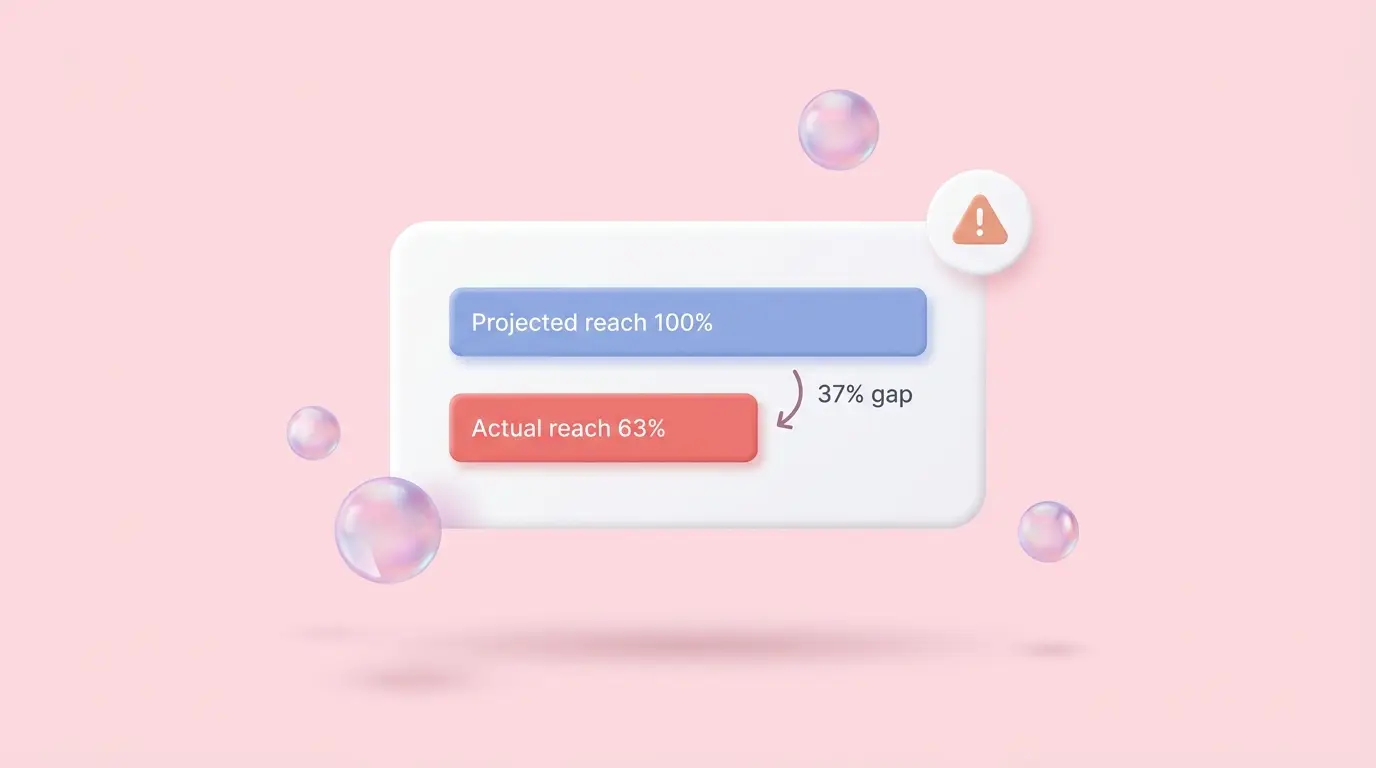
37% median gap between projected and actual reach
The same WFA study found that the median gap between the reach influencers projected and the reach brands actually measured was 37%. More than a third of the promised audience either doesn't exist or doesn't see the content.
For a brand spending $50,000 on an influencer campaign, that 37% gap means roughly $18,500 worth of impressions that never reached a real person.
~$128,000 wasted per mid-scale campaign
The WFA study estimates approximately $128,000 of budget waste per mid-scale campaign when fraud is present. This is not the total campaign cost. It's the portion attributable to fraudulent metrics.
For DTC brands spending $10,000-$100,000 per month on creators, even one fraudulent deal can wipe out the ROI of three successful ones.
What academic research confirms
Bot comment patterns are detectable
Kim et al. (SocInfo 2020) analyzed 14,221 influencers, 9.29 million users, and 65.8 million engagements. Their findings:
- Bots have a low clustering coefficient. They interact with the target creator but not with each other's networks.
- Bots write short, highly similar comments, detectable through n-gram analysis.
- These patterns are consistent enough for automated detection.
This is the largest peer-reviewed study directly relevant to influencer marketing fraud. The sample size is significantly larger than anything produced by commercial platforms.
Fake follower detection has a proven methodological foundation
Cresci et al. (2015), in their "Fame for Sale" paper, established the foundational approach: purchase actual fake follower packages, analyze the account characteristics, and build classification rules. The MIB dataset they published remains the reference benchmark.
Their 2023 follow-up paper identified common methodological errors in bot detection research: over-confidence in accuracy claims, biased datasets, and poor generalization. The 98% accuracy figures that commercial tools advertise are typically inflated by information leakage in their test data.
Coordinated campaigns leave detectable traces
Multiple 2024-2025 studies on coordinated inauthentic behavior (CIB) confirm that fake engagement campaigns, whether on Facebook, TikTok, or YouTube, produce statistically detectable coordination patterns:
- Synchronized posting timing
- Content reuse across accounts
- Reciprocal engagement graphs
These patterns are public-facing and don't require platform API access to detect.
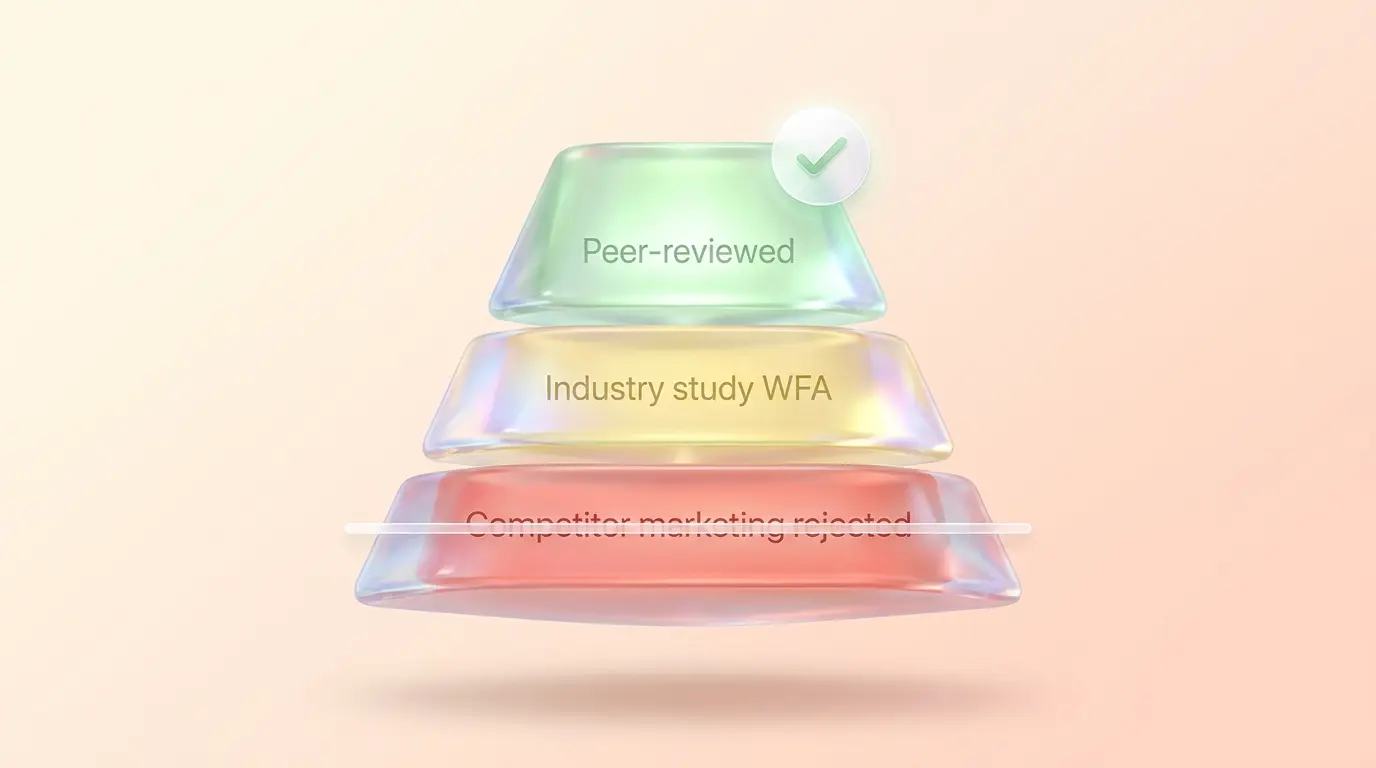
Numbers you should not trust
"36% of accounts flagged for fraud"
This figure circulates widely but its original source is unclear. Multiple blog aggregators cite it without attribution. It may be directionally correct, but it's not verifiable.
"$4.6 billion wasted" or "19.2% of spend"
These numbers appear on SEO content farm articles and are often generated content. They're not traceable to a credible primary source. Don't use them in board presentations.
Any statistic sourced from a competing audit platform
Several widely-cited fraud statistics originate from companies that sell fraud detection tools. They have a financial incentive to inflate fraud rates. This doesn't mean their data is wrong, but it's not independent research, and citing it uncritically is poor methodology.
Engagement rate benchmarks
The inverse relationship between audience size and engagement rate is well-documented across industry benchmarks:
| Audience size | YouTube | TikTok | |
|---|---|---|---|
| Nano (<10K) | 4-8% | 2-4% | 5-10% |
| Micro (10K-100K) | 2-5% | 1-3% | 3-8% |
| Mid (100K-500K) | 1-3% | 0.8-2% | 2-5% |
| Macro (500K-1M) | 0.8-2% | 0.5-1.5% | 1.5-4% |
| Mega (1M+) | 0.5-1.5% | 0.3-1% | 1-3% |
These ranges come from industry benchmarks (not peer-reviewed research), so treat them as directional guides, not precise thresholds. A creator significantly below these ranges for their size bracket warrants further investigation.
What this means for brands in 2026
The fraud rate is real and significant. 81% of senior marketers encountering fraud is not fear-mongering. It's the WFA, the most neutral source available.
The cost is quantifiable. ~$128K waste per mid-scale campaign, 37% reach gap. These numbers justify the cost of pre-campaign vetting.
Detection works. Academic research has proven that fake followers, bot comments, and engagement pods leave detectable patterns in publicly available data.
Most "statistics" in this space are marketing. Before citing any fraud figure, check the source. If it comes from a company selling fraud detection, it's not independent data.
The market is $30 billion and growing. Influencer marketing budgets doubled between 2024 and 2025. More money means more fraud incentive. Vetting is not optional.
ProveitGo uses deterministic detection methods validated by academic research. Every audit is reproducible and verifiable. Run an audit now.
Verify before you pay. Prove after you launch.
ProveitGo detects fake followers, bot engagement and fraud, then tracks real conversions. One dashboard, 60 seconds.
Run an Influencer Audit →Related Articles
 9 min de lecture
Âge et genre de l'audience : ce que les outils mesurent vraiment (et ce qu'ils devinent)
 11 min de lecture
Combien coûte un influenceur au Bénin et en Côte d'Ivoire ? Grille de tarifs 2026 (en FCFA)
 10 min read